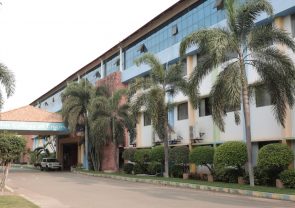
Kathir Engineering College

NEWS

50 k
Finished Sessions
70 k+
Enrolled Learners
120 +
Online Instructors
100 %
Satisfaction Rate

ABOUT THE DEPARTMENT

The Department of Electrical and Electronics Engineering (EEE) is committed to producing competent, innovative, and socially responsible engineers equipped to meet the evolving technological challenges of the modern world. The department offers a comprehensive curriculum that integrates strong theoretical knowledge with practical exposure in key domains such as electrical machines, power systems, control engineering, power electronics, and renewable energy systems. Supported by a team of highly qualified and dedicated faculty members, the department emphasizes hands-on learning through state-of-the-art laboratories, industry collaborations, and real-time projects. Students are encouraged to engage in research activities, technical symposiums, workshops, and internships that enhance their professional and problem-solving skills.

The department also focuses on developing leadership qualities, teamwork, communication skills, and ethical values to prepare students for successful careers. Graduates from the EEE department find opportunities across diverse sectors including power generation, automation, IT, renewable energy, and research organizations, or pursue higher studies in reputed institutions. With a vision to achieve excellence in education, innovation, and research, the Department of Electrical and Electronics Engineering continues to play a vital role in shaping technically proficient engineers who contribute effectively to industrial growth and sustainable development.

The Power Electronics and Drives (PED) department is dedicated to advancing education, research, and innovation in the fields of electric power conversion, motor control, and energy-efficient drive systems. With rapid global progress in electric mobility, renewable energy integration, and industrial automation, the department plays a vital role in preparing engineers to meet modern technological challenges.

VISION

To provide academic excellence meeting the demands of growing industries and bringing out globally competent electrical and electronics engineers through research oriented, ethical, social, innovative and industrially collaborating approach.

MISSION

Department of Electrical and Electronics Engineering

Programme Education Objectives (PEOs)

Graduates can

Program Specific Outcome (PSOs)

Graduates should be able to:

Programme Outcomes (POs)

Graduate Attribute

  1. Engineering Knowledge: Apply knowledge of mathematics, natural science, computing, engineering fundamentals and an engineering specialization as specified in WK1 to WK4 respectively to develop the solution of complex engineering problems.

  2. Problem Analysis: Identify, formulate, review research literature and analyze complex engineering problems reaching substantiated conclusions with consideration for sustainable development.

  3. Design/Development of Solutions: Design creative solutions for complex engineering problems and design/develop systems/components/processes to meet identified needs with consideration for the public health and safety, whole-life cost, net zero carbon, culture, society and environment as required.

  4. Conduct Investigations of Complex Problems: Conduct investigations of complex engineering problems using research-based knowledge including design of experiments, modelling, analysis & interpretation of data to provide valid conclusions.

  5. Engineering Tool Usage: Create, select and apply appropriate techniques, resources and modern engineering & IT tools, including prediction and modelling recognizing their limitations to solve complex engineering problems.

  6. The Engineer and The World: Analyze and evaluate societal and environmental aspects while solving complex engineering problems for its impact on sustainability with reference to economy, health, safety, legal framework, culture and environment.

  7. Ethics: Apply ethical principles and commit to professional ethics, human values, diversity and inclusion; adhere to national & international laws.

  8. Individual and Collaborative Team work: Function effectively as an individual, and as a member or leader in diverse/multi-disciplinary teams.

  9. Communication: Communicate effectively and inclusively within the engineering community and society at large, such as being able to comprehend and write effective reports and design documentation, make effective presentations considering cultural, language, and learning differences.

  10. Project Management and Finance: Apply knowledge and understanding of engineering management principles and economic decision-making and apply these to one’s own work, as a member and leader in a team, and to manage projects and in multidisciplinary environments.

  11. Life-Long Learning: Recognize the need for, and have the preparation and ability for i) independent and life-long learning ii) adaptability to new and emerging technologies and iii) critical thinking in the broadest context of technological change.


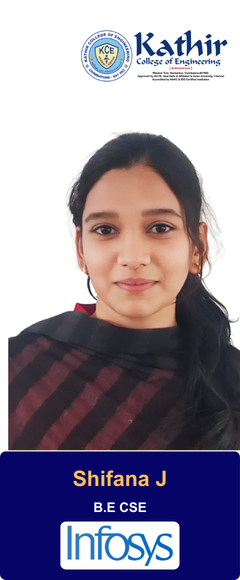
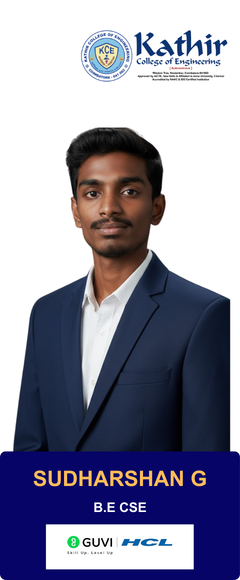
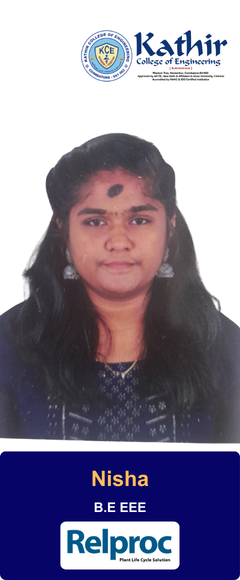
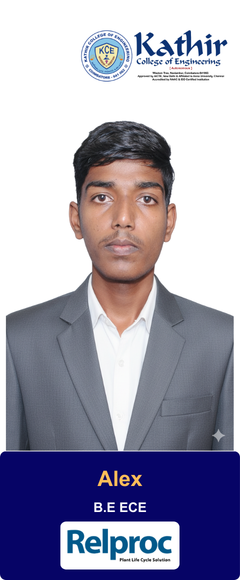
Placement Highlights

2025-2026

Shaping careers through strong industry
connections and placement excellence.

Speach

HOD’S Message

The field of Electrical and Electronics Engineering continues to be one of the most dynamic and impactful branches of engineering, forming the foundation for innovations that power our modern world — from smart grids and renewable energy systems to robotics and artificial intelligence.

Our department is committed to providing a holistic learning environment that nurtures technical competence, research aptitude, and ethical values. We emphasize a balanced blend of theoretical knowledge and practical exposure through well-equipped laboratories, industry collaborations, and hands-on projects. Our experienced faculty members continuously strive to mentor and inspire students to excel in academics, research, and innovation.

Beyond academics, we encourage our students to participate actively in technical symposiums, workshops, and community outreach programs that foster leadership, teamwork, and creativity. As we move forward, our goal remains to produce globally competent engineers who contribute to the advancement of technology and the betterment of society.

I take this opportunity to thank the dedicated faculty, staff, and enthusiastic students for their continued efforts in upholding the department’s legacy of excellence.

Wishing you a successful career!!!

Dr.V.Gomathy,
Professor and Head,
Department of Electrical and Electronics Engineering.

Professors

FACULTY

Dr. V. Gomathy

ASSOCIATE PROFESSOR

Specialization : Power Electronics, Power System, Renewable Energy Sources, Soft Computing

Dr. V. Kalaipoonguzhali

ASSOCIATE PROFESSOR

Specialization : Communication and Digital Signal Processing

Dr. Ramji Tiwari

ASSOCIATE PROFESSOR

Specialization : Renewable Energy Sources, DC Converters DC, Grids Control Strategies for Wind Energy

Mr. N. Sathishkumar

ASSISTANT PROFESSOR

Specialization : Power Electronics and Drives

Mr.K.Syril Jenifer Paul

ASSISTANT PROFESSOR

Specialization : Applied Electronics

Mrs. N. Saranya

ASSISTANT PROFESSOR

Specialization : Power Electronics and Drives, Renewable Energy Systems

Mr. D. Ramesh

ASSISTANT PROFESSOR

Specialization : Power Electronics and Drives

Ms. P. Dharani

ASSISTANT PROFESSOR

Specialization : Control and Instrumentation

Dr. T. Sivakumar

ASSISTANT PROFESSOR

Specialization : Energy Engineering

Mrs. S. Kalpana

ASSISTANT PROFESSOR

Specialization : Power Electronics and Drives

Mrs. M. Swapna

ASSISTANT PROFESSOR

Specialization : Power Electronics and Drives, Renewable Energy Systems

Mrs. C. Sivaranjani

ASSISTANT PROFESSOR

Specialization :

Laboratory

Lab Details

AC Machines Laboratory

View more

DC Machines Laboratory

View more

Power Electronics Laboratory

View more

Microprocessor and Microcontroller Laboratory

View more

Control and Instrumentation Laboratory

View more

Value-Added Courses / Innovative Teaching Methodologies/ MOU companies

image

NPTEL Courses

NPTEL Courses

NPTEL Courses

image

NASSCOM future skills

NASSCOM future skills

NASSCOM future skills

image

Infosys Spring Board

Infosys Spring Board

Infosys Spring Board

image

Fundamentals of Energy Auditing

Fundamentals of Energy Auditing

Fundamentals of Energy Auditing

image

Solar PV System Design & Installation

Solar PV System Design & Installation

Solar PV System Design & Installation

image

Electric Vehicle Technology & Charging Infrastructure

Electric Vehicle Technology & Charging Infrastructure

Electric Vehicle Technology & Charging Infrastructure

2020 - 2024

Testimonials

image
From Campus to Corporate Leadership: A Journey Built on Strong Foundations
My time at Kathir College of Engineering as part of the 2012 batch was transformative in ways I couldn’t have anticipated when I first walked through those gates. The institution didn’t just provide me with an engineering degree—it equipped me with the skills, mindset, and confidence to excel in a competitive global industry.
The comprehensive curriculum and dedicated faculty at Kathir College fostered both technical excellence and professional discipline. The emphasis on quality standards, systematic problem-solving, and attention to detail during my undergraduate years laid the groundwork for what would eventually become my career specialization in Quality Assurance.
What truly set my college experience apart was the practical exposure and industry-oriented approach to learning. The projects, internships, and interactions with industry professionals gave me insights that textbooks alone couldn’t provide. This real-world perspective proved invaluable as I transitioned from student to professional.
Today, as the Head of Quality Assurance at Cable Solutions PLC in Sri Lanka, I draw upon the strong analytical skills and engineering principles I learned at Kathir College. The college taught me that quality isn’t just about meeting standards—it’s about exceeding expectations, a philosophy that drives my work every day.
To future engineers: Kathir College of Engineering offers more than education—it offers transformation. The knowledge, values, and professional ethics instilled here will serve as your compass throughout your career, wherever in the world it takes you.
Mouli Mathan B Batch 2012
Head of Quality Assurance, Cable Solutions PLC, Sri Lanka
image
The Foundation That Launched My Journey from Engineering Student to Entrepreneur and Researcher
My journey at Kathir College of Engineering began with a B.E. in Electrical and Electronics Engineering, and I can confidently say it was the foundation that shaped everything I’ve achieved since. The rigorous curriculum, combined with exceptional faculty mentorship, didn’t just teach me technical concepts—it instilled in me a problem-solving mindset that has proven invaluable throughout my career.
The hands-on laboratory experience and project-based learning approach prepared me for real-world challenges in ways I couldn’t have imagined. The professors went beyond textbooks, encouraging critical thinking and innovation that sparked my passion for both research and entrepreneurship.
Today, as I pursue my Post-Doctoral research while simultaneously running my own company, I often reflect on how the strong technical foundation and analytical skills I developed at Kathir College of Engineering continue to serve me. The college taught me to think like an engineer, work like a researcher, and dream like an entrepreneur.
The supportive academic environment, state-of-the-art facilities, and emphasis on both theoretical knowledge and practical application gave me the confidence to pursue advanced research while building a business. I’m grateful for the education that didn’t just prepare me for a job, but equipped me for a lifetime of learning and innovation.
To prospective students: if you’re looking for an institution that will challenge you, support your ambitions, and prepare you for excellence in any path you choose, Kathir College of Engineering is that place.
Dr. Ramji Tiwari Batch (2008 – 2012)
Post-Doctoral Researcher, Amrita Vishwa Vidyapeetham, Coimbatore & Founder/CEO, Matsya Agrotech Solutions, Coimbatore
image
Where Engineering Meets Leadership: My Kathir College Foundation
Kathir College of Engineering, Coimbatore, was more than just an institution where I earned my engineering degree—it was the crucible where my professional identity was forged. The four years I spent on campus shaped not only my technical capabilities but also my understanding of teamwork, leadership, and human potential.
What distinguished Kathir College from other institutions was its holistic approach to education. While the engineering curriculum was rigorous and industry-relevant, the college also emphasized soft skills, communication, and personality development—elements that are often overlooked but prove crucial in corporate environments. The faculty didn’t just teach subjects; they mentored us, challenged our thinking, and prepared us for the multifaceted demands of the professional world.
The vibrant campus culture, diverse student community, and numerous extracurricular opportunities at Kathir College helped me develop skills that transcend engineering. These experiences taught me how to work with diverse teams, manage projects, and lead initiatives—competencies that became instrumental as I transitioned into the field of Talent Management.
Today, as Manager of Talent Management at Samsung India Electronics Pvt Ltd in Chennai, I find myself applying lessons learned at Kathir College every single day. Whether it’s identifying potential in candidates, developing talent strategies, or building high-performing teams, the foundation laid at Kathir College continues to guide my approach.
To prospective students: Kathir College of Engineering, Coimbatore, offers an education that prepares you not just for your first job, but for a dynamic and fulfilling career. It’s an institution that believes in nurturing complete professionals, not just qualified engineers.
Gowtham Doraiswamy
Manager, Talent Management, Samsung India Electronics Pvt Ltd, Chennai